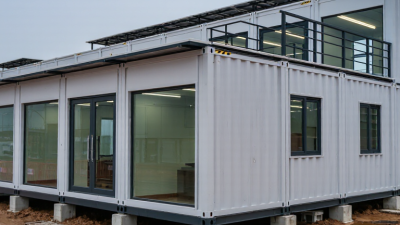
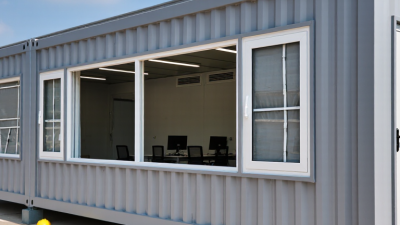
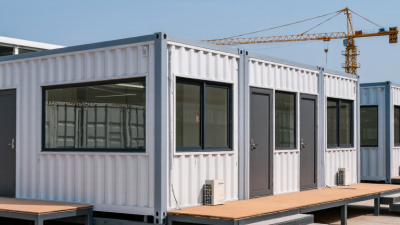
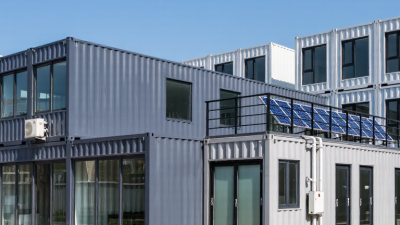
China’s 20ft office container market will remain highly competitive in 2026. Buyers can find compact units for construction sites, schools, farms, security points, and temporary business spaces. Yet attractive photographs rarely reveal the full product quality.
This guide examines ten leading Chinese suppliers through practical criteria. These include steel thickness, insulation performance, electrical safety, ventilation, window sealing, floor strength, and delivery support. A reliable 20ft office container should feel stable underfoot, even when several people work inside. Its wall panels should resist moisture. Its wiring should be clearly documented. Small details matter, such as door alignment, drainage edges, and washable interior surfaces.
Architect Adam Kalkin, known for container-based architecture, has said, “A container is a box with possibilities.” That idea fits office units, but only partly. A box becomes a usable workplace through careful engineering, honest specifications, and responsible installation. Supplier experience also matters. Manufacturers with documented projects, factory inspections, and responsive after-sales teams usually reduce purchasing risks.
The ranking considers customization, production capacity, export experience, certifications, transparent communication, and value for money. It does not treat the lowest quotation as the best choice. Sometimes, a cheaper unit hides thinner insulation or weaker hardware. That is easy to miss before delivery.
No supplier performs perfectly in every region. Shipping distance, local climate, foundation conditions, and installation standards can change the final result. Readers should verify certificates, request recent project evidence, and inspect detailed drawings before ordering. This guide offers a practical starting point, not a substitute for professional site assessment.
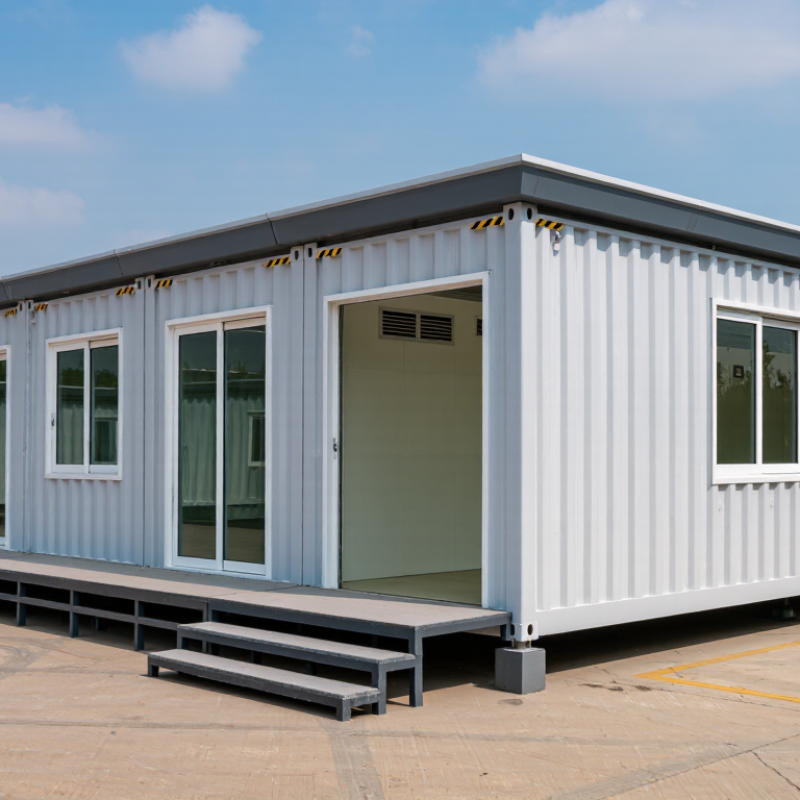
A 20ft office container is a factory-built workspace adapted from a standardized steel freight unit. Under ISO 668, a typical unit measures about 6.06 meters long, 2.44 meters wide, and 2.59 meters high externally. Inside, insulation, wiring, windows, flooring, ventilation, and office partitions create a usable work environment. It can serve as a site office, reception room, security office, or temporary meeting space.
Its value is practical, not glamorous. McKinsey’s 2019 modular construction report found that modular methods can reduce project schedules by 20–50% and costs by up to 20%, when designs and production are well coordinated.
However, a container is not automatically comfortable. Poor thermal bridges, weak air circulation, and limited daylight can make a small room feel harsh. Energy performance depends on climate, insulation thickness, glazing, and equipment selection. This is where supplier experience matters.
Tips: Check the internal ceiling height after insulation. Ask for fire, electrical, and structural documentation. Confirm local placement rules before ordering. A 20ft unit may look simple, but every square meter matters. A desk, two chairs, a cabinet, and a split air-conditioner can quickly consume the floor area. I would also request a full wiring layout. Small omissions become expensive corrections.
China’s 20ft office container suppliers are increasingly evaluated by practical performance, not attractive renderings.
A standard unit is about 6 meters long and 2.4 meters wide. Reliable suppliers provide detailed drawings before production. These drawings should show wall thickness, window positions, electrical routes, and floor loading.
Details matter. Experienced manufacturers usually offer insulated sandwich panels, steel frames, durable flooring, LED lighting, and pre-installed sockets. Rock wool or polyurethane insulation can improve comfort, but the correct choice depends on climate and budget.
A capable supplier also manages customization without weakening structural quality.
Common options include glass partitions, air-conditioning openings, data cabling, storage cabinets, and reinforced doors. Factory inspections should verify welding quality, paint coverage, drainage, and dimensional accuracy. Third-party test reports add useful evidence, especially for fire resistance and electrical safety.
However, documents alone are insufficient. Buyers should compare physical samples, production photographs, warranty terms, and replacement procedures. That sounds simple. It is not always simple.
Delivery coordination is another key feature among China’s office container suppliers in 2026.
Clear quotations should separate materials, interior fittings, transport preparation, and installation guidance. Suppliers with export experience can provide packing lists and realistic production schedules. Some promises still deserve careful questioning.
A low price may hide thinner panels, weaker hinges, or limited after-sales support. Site conditions also matter, including lifting access, foundation level, local weather, and utility connections.
One practical compromise remains unavoidable: a compact office saves space, but poor ventilation can quickly make it uncomfortable.
A top-ten list should begin with evidence, not online visibility. UNCTAD’s Review of Maritime Transport 2024 reported 12.3 billion tonnes of seaborne trade in 2023. This supports continued demand for transportable workspaces. However, a 20ft office container is more than a painted steel box.
Check whether the supplier follows ISO 668 dimensions, with a standard external length near 6.058 metres. Request verified drawings, steel grades, insulation thickness, floor loading, and roof drainage details.
Factory experience matters when modifications are involved. Review welding records, coating procedures, electrical test reports, and water-ingress inspection results. The IMO International Convention for Safe Containers requires valid CSC compliance for transport containers, but office alterations may change the approval status. Ask for clarification in writing.
Compare thermal performance against local building requirements, not only sales claims. The World Bank’s Logistics Performance Index 2023 also shows why delivery reliability deserves a separate score: customs, infrastructure, tracking, and timeliness directly affect project risk.
A low quotation can become expensive after port storage and replacement parts.
Tips: Build a weighted evaluation sheet. Give quality 30%, compliance 25%, delivery 20%, service 15%, and price 10%. Inspect one finished unit before paying the balance. Photograph hidden cable routes and floor edges. Ask for a realistic production schedule. Some suppliers provide impressive samples, yet repeatability remains uncertain. That weakness deserves a lower score.
China Top 10 20ft Office Container Suppliers 2026
Comparison of China’s Top 10 20ft Office Container Suppliers
Comparing China’s top ten suppliers requires more than checking factory prices. A 20ft office container normally follows ISO 668 dimensions: 6,058 mm long, 2,438 mm wide, and 2,591 mm high. The strongest suppliers offer clear drawings, steel-grade details, insulation values, and electrical test records. Drewry’s Container Census 2024 reported a global container fleet above 50 million TEU, showing the scale of standardized production. However, office conversion quality varies sharply. Some suppliers provide excellent welding but weak documentation. Others deliver attractive interiors with limited thermal data. That gap matters.
The comparison should measure six points: structural steel, fire-resistant panels, insulation thickness, wiring protection, production lead time, and after-sales response. Suppliers with ISO 9001 systems often present more consistent inspection records, but certification alone is not proof of site performance. The International Energy Agency reports that buildings account for around 30% of global energy demand. Therefore, roof insulation and window performance deserve serious weighting. A cheap unit may become expensive in a hot summer.
Tips: Request one completed inspection file, not only photographs. Check floor loading, door sealing, drainage, and socket protection. Ask for a sample unit or factory video call. In my view, comparing ten suppliers is useful, but scoring can still be imperfect. Local installation conditions may change the final result.
Comparison of anonymized supplier performance across price competitiveness, customization capability, delivery readiness, and warranty coverage. Scores are normalized on a 100-point scale and exclude company names and brand information.
Higher scores indicate stronger performance in each evaluation dimension. The comparison is intended as a neutral market benchmark for standard 20ft office container procurement.
Buying a 20ft office container from China requires more than comparing online prices. A standard unit measures about 6.06m long, 2.44m wide, and 2.59m high under ISO 668. Confirm usable interior space after insulation, wiring, wall panels, and furniture. Ask for a dimensioned layout, steel thickness, floor loading, insulation specification, and corrosion protection. Small differences become obvious when two desks, a cabinet, and an air conditioner share the same room.
Energy performance deserves careful attention. The International Energy Agency reported that buildings consumed about 30% of global final energy in 2022. Therefore, request tested U-values, window specifications, ventilation details, and electrical load calculations. Mineral wool, PIR, and rock wool can perform differently in humid climates. Do not accept “premium insulation” as a technical description. It is too vague. Review factory drawings before production, then use a third-party inspection for welding, dimensions, leakage, doors, and electrical safety. McKinsey’s modular construction research found that off-site methods can shorten schedules by 20–50%, but those gains depend on accurate design and disciplined logistics.
Evaluate the supplier’s experience with export packing, foundation requirements, spare parts, installation manuals, and after-sales response times. Request recent project evidence, quality records, and clear payment milestones. The World Bank’s Logistics Performance Index 2023 highlights the importance of shipment tracking and customs reliability. Freight delays still happen. A cheaper quotation may exclude local unloading, crane access, taxes, or weather protection. My checklist is not perfect, but it reduces expensive surprises.