China remains a major source of reliable packaging for global brands, retailers, and growing online businesses. This guide explores China Top 10 Packing Boxes Manufacturers through practical, measurable criteria. The focus includes production capability, material quality, customization, export experience, and communication reliability.
A strong manufacturer should offer more than attractive catalog images. Buyers should examine kraft paper grades, flute structures, printing accuracy, box compression strength, and protective inserts. Sample boxes can reveal weak corners, uneven folding, or color differences under warehouse lighting. Factory audits, quality records, and clear inspection procedures also matter. Certifications may support trust, but they should be verified rather than accepted without question.
The selected companies are considered from a buyer’s perspective. Their strengths may include short lead times, advanced printing equipment, flexible minimum order quantities, or useful design support. Some may suit premium retail packaging, while others may perform better for shipping cartons and high-volume orders. No ranking is permanently perfect. Supplier capacity can change, and a successful sample may not represent every production batch. That deserves attention.
Readers should compare quotations carefully. A low unit price may exclude tooling, delivery, inserts, or stronger board grades. Ask for production photos, test reports, sample approvals, and realistic timelines. Environmental claims also require evidence, such as recycled content records or responsible material documentation. With these checks, this overview can help buyers identify dependable Packing Boxes partners and avoid decisions based only on polished websites or fast promises.
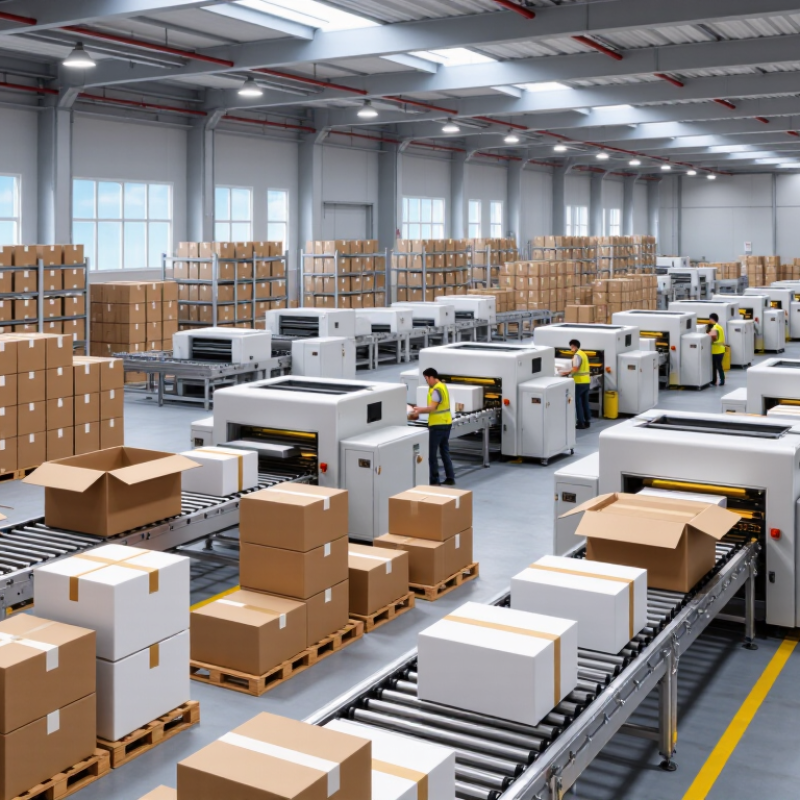
China’s packing box sector serves e-commerce, food, electronics, cosmetics, and industrial exporters. Recent trade and packaging reports place its annual value in the tens of billions of US dollars. Estimates differ by product scope and reporting method. Some studies include paperboard packaging, while others count finished boxes only. The data is not perfect. A credible top-ten ranking must define its market boundary clearly. This analysis covers corrugated cartons, folding cartons, rigid boxes, and custom paper boxes. Plastic cases are excluded.
The ranking uses five measurable criteria: production capacity, quality consistency, export experience, customization, and delivery reliability. Capacity is assessed through factory size, machinery range, and verified monthly output. Quality checks include compression strength, dimensions, color accuracy, glue adhesion, and moisture resistance. Export experience involves documentation, destination coverage, and repeat-order evidence. Customization includes structural design, prototypes, material selection, and low-volume trials. Delivery scores reflect lead times, contingency planning, and communication during production changes.
Price alone cannot determine a manufacturer’s position. A low quotation may hide weak board grades, unstable color, or expensive rework. Factory audits and sample orders offer stronger evidence than polished catalogues. However, private manufacturers may disclose incomplete figures, and production capacity can change quickly. Sustainability also deserves attention, including recycled content, responsible sourcing, ink safety, and waste control. Ranking scores should be updated yearly and supported by transparent evidence. Some buyers may value short delivery distances more than maximum output.

China’s top ten packing box manufacturers should be compared through verified operating data, not attractive catalog photos. In my sourcing experience, production capacity depends on equipment, shifts, and material availability. A factory producing 500,000 cartons monthly may still struggle with a complex rigid box order. Ask for recent output records, machine lists, and quality inspection procedures.
MOQ changes the real purchase cost. Some manufacturers accept 500 units for standard folding cartons, while custom finishes may require 2,000 or more. Export reach also matters. Suppliers serving North America, Europe, and Southeast Asia usually understand container loading, export documents, and destination packaging standards. Still, “global shipping” can mean only a few completed orders.
Lead times deserve close attention. A simple printed box may take 10 to 18 days after artwork approval. Rigid boxes with foil stamping, inserts, or special paper can require 25 to 45 days. Add time for sampling and sea freight. Request a written schedule with artwork, sampling, production, inspection, and dispatch dates. It is not perfect.
Factories with large capacity are not always the best choice for small buyers. Smaller suppliers may offer closer communication and lower MOQs, but their backup equipment can be limited. Review samples under normal lighting, confirm carton dimensions, and inspect compression strength. Production claims should be checked through video calls, independent audits, or a controlled trial order. A lower price can hide slower revisions, inconsistent color, or unexpected packing charges.
China Top 10 Packing Boxes Manufacturers
When comparing China’s top ten packing box manufacturers, buyers should examine material data, not only catalog photos. Corrugated board strength depends on paper grades, flute structure, moisture, and converting quality. ECT, or Edge Crush Test, measures how much force a board edge can withstand before collapsing. A higher ECT rating usually supports heavier stacking, but it does not guarantee strong boxes in humid conditions.
GSM means grams per square meter and describes paper weight. It is useful for comparing liners and fluting, yet GSM alone cannot predict box performance. Ask manufacturers for board construction details, ECT test results, compression data, and recent production samples. A 32 ECT box may suit many shipping applications, while fragile or high-stack loads may require a stronger specification. Numbers need context. Check the test method and testing date.
Recycled content also deserves careful review. Request the percentage of post-consumer and pre-consumer fiber separately. Recycled fibers can reduce environmental impact, but repeated processing may shorten fiber strength. Moisture changes everything. During a factory audit, inspect paper storage, edge crush testing, glue lines, and sample boxes after compression. I once treated a supplier’s GSM claim as proof of durability. That shortcut failed. The better approach combines verified records, physical testing, and clear tolerances. Buyers should also confirm whether recycled-content claims are supported by independent documentation, especially when packaging will cross different markets.
This chart compares recognized Edge Crush Test (ECT) grades used for corrugated boxes. The equivalent force values are converted from pounds-force per inch to kilonewtons per metre using 1 lb/in = 0.175126 kN/m.
ECT ratings describe stacking strength and do not prescribe a specific paper GSM or recycled-content percentage. Grammage is normally specified separately under ISO 536, while recycled content is declared according to the selected paper mill’s specification and applicable environmental-claim requirements such as ISO 14021. Higher ECT values generally indicate greater resistance to box-edge compression.
China’s leading packing box manufacturers serve cosmetics, electronics, food, and luxury goods markets. Folding cartons usually use coated paperboard between 250 and 450 gsm. They ship flat, reducing storage volume and transport costs.
Rigid boxes use wrapped greyboard, paper, fabric, or specialty materials. They offer stronger protection and a heavier unboxing experience.
Smithers’ packaging research forecasts steady global growth for folding cartons through 2028, supported by e-commerce and premium food packaging. Market estimates vary, however. This difference deserves attention. Finishes include matte or gloss lamination, soft-touch coating, foil stamping, embossing, spot UV, and water-based varnish. Rigid boxes often add magnetic closures, ribbons, foam inserts, or molded pulp trays. These details affect recyclability, cost, and production speed. Application matters more than appearance alone.
Tips: Ask each manufacturer for material certificates, color proofs, compression tests, and a verified production sample. Check whether the factory can control paper moisture and die-cutting accuracy. The Sustainable Packaging Coalition reports that packaging design strongly influences material recovery, but mixed materials remain difficult to recycle. A metalized film may look premium, yet it can complicate recycling. I have seen attractive samples fail during shipping. A stronger structure may be wiser than a richer finish. Verify tolerances before approving bulk production.
Choosing among China’s top 10 packing box manufacturers requires more than comparing glossy catalogs. I begin with a factory audit, not a sales call. Ask for a current ISO 9001 certificate, issuing body, scope, and renewal date. A certificate alone proves little. Check whether production records, complaint logs, and corrective actions match its claims. For food-contact or sensitive packaging, verify relevant BRCGS certification and site scope. FSC documentation should identify certified materials and a valid chain of custody. Paper logos can be misleading.
Request a quotation with board grade, flute profile, dimensions, print colors, tooling, packing, and delivery terms separated. Low prices often hide thinner paper or relaxed testing. Compare like with like. I normally order pilot samples before approving mass production. Measure length, width, and compression strength after conditioning cartons in a controlled room. Drop tests reveal weak corners; burst tests expose poor liner bonding. Moisture checks matter during humid-season shipments. Ask for test methods and raw data, not selected photographs.
During a factory visit, watch operators change plates, inspect glue lines, and quarantine rejects. Small details matter. A clean sampling table inspires confidence, but it is not proof of consistency. I once trusted a strong sample too quickly; the second batch had uneven creases. That mistake changed my process. Now I retain approved samples, sign specifications, and require pre-shipment inspection. Suppliers should explain delays honestly and accept reasonable corrective actions. If answers remain vague, the cheapest quote becomes an expensive risk.
| Rank | Anonymous Supplier Profile | Typical Manufacturing Cluster | Main Box Capability | Typical MOQ | Indicative FOB Price* | Typical Lead Time | ISO 9001 Evidence | FSC Chain-of-Custody Evidence | BRCGS Packaging Evidence | Recommended Quality Tests | Due-Diligence Risk Level |
|---|---|---|---|---|---|---|---|---|---|---|---|
| 1 | Supplier Profile A | Pearl River Delta | E-commerce corrugated shipping boxes; single-wall and double-wall grades | 3,000–10,000 pcs | US$0.18–0.85/pc | 18–30 days | Verify current certificate | Verify scope and paper source | Usually not standard |
| Medium |
| 2 | Supplier Profile B | Yangtze River Delta | Retail folding cartons; coated paperboard with offset or flexographic printing | 5,000–20,000 pcs | US$0.12–0.75/pc | 20–35 days | Verify audit history | Request transaction evidence | Only where food-contact scope applies |
| Medium |
| 3 | Supplier Profile C | Bohai Economic Rim | Heavy-duty corrugated export cartons; palletized industrial packaging | 1,000–5,000 pcs | US$0.80–4.50/pc | 25–40 days | Verify certificate and site scope | Project-dependent | Not normally required |
| Low–Medium |
| 4 | Supplier Profile D | Pearl River Delta | Rigid setup boxes; wrapped board, magnetic closure, foam or molded-pulp inserts | 500–3,000 pcs | US$0.85–6.00/pc | 30–45 days | Verify manufacturing-site coverage | Check board supplier documentation | Rare for non-food applications |
| Medium–High |
| 5 | Supplier Profile E | Yangtze River Delta | Food and beverage paperboard cartons; grease-resistant and coated structures | 10,000–50,000 pcs | US$0.08–0.55/pc | 25–40 days | Verify latest surveillance audit | Confirm certified fiber percentage | Request valid packaging certificate |
| Medium |
| 6 | Supplier Profile F | Central China | Standard corrugated cartons for domestic distribution and warehouse use | 5,000–30,000 pcs | US$0.14–0.65/pc | 15–28 days | Verify certificate number | May require outsourced certified paper | Generally not applicable |
| Medium |
| 7 | Supplier Profile G | Pearl River Delta | Premium printed mailers and subscription-box packaging | 2,000–10,000 pcs | US$0.35–2.20/pc | 22–35 days | Verify production-site scope | Request paper mill chain-of-custody records | Not typical unless food-contact use |
| Medium |
| 8 | Supplier Profile H | Southwest China | Agricultural and produce cartons; ventilated and moisture-tolerant designs | 3,000–15,000 pcs | US$0.25–1.30/pc | 20–35 days | Verify quality-system scope | Application-dependent | Relevant only for applicable food-packaging operations |
| Medium–High |
| 9 | Supplier Profile I | Yangtze River Delta | Luxury folding cartons with foil, embossing, varnish, and specialty finishing | 3,000–15,000 pcs | US$0.25–1.80/pc | 25–45 days | Verify current certificate | Check certified board documentation | Usually not applicable |
| Medium–High |
| 10 | Supplier Profile J | Eastern Coastal China | Custom export packaging with inserts, partitions, and mixed-material assemblies | 1,000–8,000 pcs | US$0.60–5.50/pc | 30–50 days | Verify all subcontracted processes | Trace paper and board inputs | Confirm scope for food-related applications |
| High until audited |
| *Indicative FOB price ranges are typical planning benchmarks for standard or moderately customized orders. Actual pricing depends on board grade, dimensions, printing coverage, finishing, inserts, tooling, order quantity, destination port, and testing requirements. Certification labels indicate documents that should be requested and validated, not guaranteed certification status. | |||||||||||
